


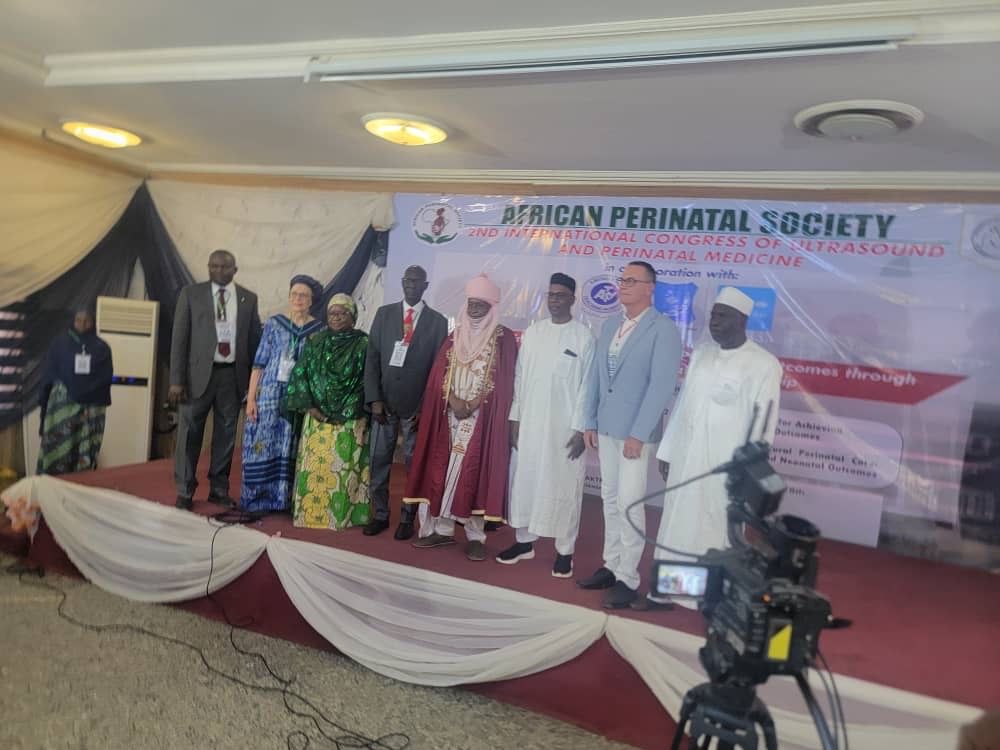
Experts in maternal and perinatal medicine have called for stronger antenatal care and early pregnancy registration as part of efforts to reduce maternal and neonatal deaths in Nigeria and other African countries.
They made the call in Kano during the 2nd International Congress of Ultrasound and Perinatal Medicine organised by the African Perinatal Society (APS).
Read also: Kano, UNICEF, WHO Boost 2026 Vaccination Campaign
The congress, themed “Synergy in Practice: Transforming Perinatal Outcomes Through Obstetrics and Neonatal Partnerships,” brought together specialists, healthcare professionals, researchers and policymakers from Nigeria, other African countries and beyond.
President of the APS, Prof. Aliu Labaran Tayebu, said the conference was designed to bring together perinatologists to discuss practical strategies for reducing maternal and perinatal morbidity and mortality.
Tayebu, a consultant obstetrician-gynaecologist and lecturer at Bayero University Kano, said the society was established in Nigeria in 2016 as an offshoot of the International Academy of Perinatal Medicine.
He explained that the first congress was also held in Kano in 2016, adding that the current gathering was focused on strengthening skills and improving the quality of care available to pregnant women and newborns.
According to him, participants were drawn not only from secondary and tertiary healthcare facilities but also from primary healthcare centres, including nurses, midwives and doctors serving rural communities.
“We hope this will change practice and improve the quality of care given to pregnant women and babies because that is the bane of our communities — lack of quality healthcare provision to save the lives of children and mothers,” he said.
Tayebu said the congress had already produced practical benefits, including the donation of medical equipment to healthcare facilities in need by some international participants.
He added that international experts had also agreed to return to Nigeria from next year to conduct periodic three-day training programmes for frontline healthcare workers.
He said plans were also underway to establish research collaborations with international partners to generate new evidence that could be translated into improved clinical practice.
The APS president said the training would subsequently be cascaded to primary healthcare facilities to reach health workers who were unable to attend the congress.
Read also: EU Partners Deepen Kano Development Youth Empowerment, Ties
A professor of obstetrics and gynaecology and maternal-fetal medicine from Finland, Beverly Stofanovich, said Nigeria and other sub-Saharan African countries continued to face a serious maternal health challenge, stressing that many interventions capable of saving lives were relatively inexpensive.
Stofanovich, who spoke on challenges associated with implementing international guidelines in obstetric care, identified late booking for antenatal care as one of the major barriers to reducing maternal deaths.
She said women should be encouraged to present themselves at health facilities as soon as they suspected pregnancy so that health workers could identify and manage potential complications early.
“The problem is awareness. Women should know that early antenatal care can lower the possibility of death during pregnancy and after birth,” she said.
According to her, early antenatal attendance enables healthcare providers to identify high-risk pregnancies and introduce preventive measures, including appropriate interventions for women at risk of pre-eclampsia.
She also noted that early care could help prevent mother-to-child transmission of HIV, manage diabetes during pregnancy and identify conditions that could result in complications during childbirth.
Stofanovich stressed the importance of educating women and community health workers, particularly in rural areas, where access to specialist services may be limited.
She said basic antenatal services provided by trained midwives at rural facilities could make a significant difference if women were encouraged to seek care early.
In a goodwill message, UNICEF Health Manager, Dr Serekeberehan Seyoum, commended the APS for promoting maternal, fetal and neonatal health through research, training and collaboration.
Seyoum said the congress provided an important platform for healthcare professionals, researchers and policymakers to exchange knowledge, explore innovations and strengthen partnerships for improved perinatal care.
He particularly praised the focus on capacity building, practical skills and modern technologies such as ultrasound and telemedicine.
Read also: Kano Government Fights Polio with Ward Committee Teams
He expressed confidence that the scientific sessions and hands-on training would strengthen healthcare systems, improve the skills of frontline workers and contribute to efforts to reduce maternal and perinatal morbidity and mortality in Nigeria and across Africa.
The congress featured lectures, practical sessions and training on areas including fetal heart examination, fetal Doppler studies and neonatology, with participants expected to apply the knowledge acquired in their respective health facilities.
