


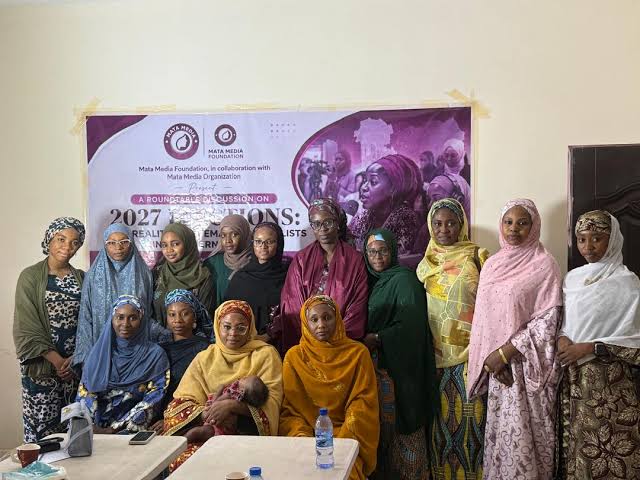
Mata Media, Women journalists in Northern Nigeria are experiencing high levels of work-related stress, emotional exhaustion and inadequate workplace support, with 50 per cent considering leaving the profession because of its impact on their wellbeing.
The findings are contained in an exploratory survey conducted by Mata Media Organisation and Mata Media Foundation involving 58 women journalists across Northern Nigeria.
Read also: Marwa Launches Landmark Arms Training for NDLEA
The survey, titled “Silent Burdens, Shared Strengths: Understanding Mental Health, Stigma and Systems of Care Among Women Journalists in Northern Nigeria,” examined the mental health challenges faced by women journalists, their sources of support and the availability of workplace care systems.
According to the findings released on Saturday, 91 per cent of respondents experience work-related stress at least sometimes, while 78 per cent reported emotional exhaustion or burnout. Another 86 per cent said they experienced exhaustion associated with heavy workloads or information overload.
The survey also revealed that 29 respondents, representing 50 per cent, had considered leaving journalism because of its negative impact on their wellbeing.
Major sources of pressure identified by respondents included long and irregular working hours, tight deadlines, low pay, financial and job insecurity, family responsibilities, gender discrimination, difficult workplace relationships and the emotional toll of covering traumatic events.
The report further showed that 86 per cent of respondents either said their newsrooms did not provide mental health or wellbeing support or were unsure whether such support existed.
Many of the journalists said they relied on family members, partners, friends, colleagues, prayer, spiritual practices, rest and temporary withdrawal from work to cope with the challenges.
Commenting on the findings, the Managing Director of Mata Media Organisation, Fauziyya Kabir Tukur, said journalists should not be left to depend entirely on informal support networks to manage the pressures of their profession.
“Family, friends and colleagues can provide invaluable support, but journalists should not have to depend entirely on informal networks to cope with the pressures of their profession,” she said.
Tukur called on newsrooms to establish supportive working environments where journalists could seek assistance without fear of being judged, penalised or perceived as weak.
On mental health stigma, the survey found that 69 per cent of respondents rated their comfort level when discussing mental health concerns with editors or supervisors at just one or two on a five-point scale.
The report identified fear of judgement, concerns about job security, possible missed opportunities, confidentiality issues, lack of trust in management and cultural and social expectations as major barriers preventing journalists from discussing their mental health challenges.
Read also: Kano Trains 44 LGAs on Health Data
It noted that encouraging journalists to speak openly about their struggles would not be sufficient without creating safe and supportive workplace environments.
Despite the challenges, respondents identified passion for journalism, community service, giving people a voice, telling important stories and making a difference in society as reasons they remained committed to the profession.
According to Tukur, the findings showed that women journalists remained dedicated to their work and the communities they served, despite the pressures they faced.
“The challenge is how to make the profession sustainable enough for them to continue doing that work without sacrificing their wellbeing,” she said.
To address the situation, Mata Media Organisation and Mata Media Foundation called for regular and confidential staff wellbeing checks, access to professional mental health services, trauma debriefing after difficult assignments, reasonable workloads, adequate breaks and flexible working arrangements.
They also recommended mental health and trauma-awareness training, stronger physical and digital safety systems, anti-harassment measures, gender-responsive workplace policies, peer-support networks and improved attention to fair pay and job security.
The organisations stressed that newsroom support systems did not necessarily require large budgets, noting that media houses could begin with regular staff check-ins, safe reporting channels and referral networks for professional assistance.
Mata Media has also presented the findings to the wider journalism community through a webinar at the Mental Health in Journalism Summit, organised by The Self Investigation, contributing to discussions on newsroom culture, journalist safety and mental health.
However, the organisations clarified that the survey was an exploratory assessment involving 58 respondents and was neither statistically representative of all women journalists in Northern Nigeria nor a clinical or diagnostic evaluation.
They said the consistency of the responses nevertheless provided an important basis for further research, discussion and action.
Mata Media Organisation and Mata Media Foundation urged media owners, editors, journalism associations, civil society organisations, funders and other stakeholders to make journalists’ wellbeing an integral part of building a sustainable media industry.
Read also: North-West Leaders, Partners Push Child Welfare, Social Protection
“We cannot continue to ask journalists to tell difficult stories, work under pressure and absorb traumatic experiences while treating their wellbeing as an individual responsibility,” the organisations said.
They urged media houses to consult journalists directly about the support they need rather than assume that newsroom management already understands their challenges.
