


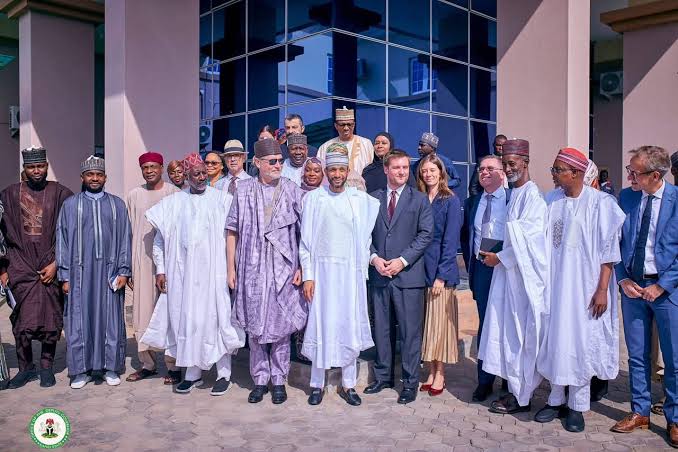
A delegation of senior EU Heads of Mission and development partners has wrapped up a strategic tour of Kano State focused on strengthening ties, empowering young people, and advancing long-term development across Northern Nigeria.
Led by Gautier Mignot, EU Ambassador to Nigeria and ECOWAS, the team included envoys from EU member countries plus representatives from UNICEF, GIZ, Plan International Nigeria, UN-Habitat, and other global development agencies.
Read also: Kano Governor Congratulates Professor Gwarzo on 48th Birthday Milestone
The group met with Kano State Deputy Governor Murtala Sule Garo, who stood in for Governor Abba Kabir Yusuf. Talks centered on city development, youth inclusion, social equity, and expanding cooperation between Kano and international partners.
Garo restated the state’s dedication to growth through collaboration.
“Governor Abba Kabir Yusuf’s administration is building an environment that attracts ethical investment, ensures transparency, and deepens cooperation with global partners to meet our shared development targets,” he said.
Kano officials also unveiled the state’s Urban Development Strategy. The plan aims to guide sustainable expansion, improve infrastructure, build resilience, foster unity, and open up economic opportunities across the metropolis, with technical backing from UN-Habitat.
Ambassador Mignot said the visit showed the EU’s resolve to stay actively involved in Northern Nigeria.
“This mission highlights the EU’s commitment to direct engagement with Northern Nigerian communities and institutions. By connecting with citizens, youth, and local bodies, we’re reinforcing partnerships that drive inclusive prosperity, stability, and opportunity,” he noted.
At Bayero University, Kano, the delegation engaged students on youth involvement, innovation, and grassroots solutions to local challenges.
Read also: Nigeria Approves Troop Development to Benin Amidst Coup Attempt
Dr. Markus Wagner, GIZ Nigeria and ECOWAS Country Director, stressed the need to back women and young entrepreneurs.
“Supporting women and youth in business builds stronger communities. Through skills training and enterprise support, we’re creating jobs and strengthening economies across the North,” Wagner said.
The team inspected several EU-funded initiatives, including Plan International’s accelerated learning program and a UNICEF-supported Qur’anic education center, both designed to expand access to quality education and protect children’s rights.
Dr. Charles Usie, Plan International Nigeria Country Director, emphasized education investment for vulnerable children.
“Education goes beyond classrooms. It’s about giving children the tools to learn, grow, and take charge of their future,” Usie said.
They also toured a facility producing ready-to-use therapeutic food for malnourished children and met with Kannywood creatives, recognizing storytelling’s influence on public opinion and social change.
UNICEF Nigeria Representative Wafaa Saeed underscored prioritizing children and youth.
Read also: Borno State Governor Dissolves Executive Council Ahead of Elections
“Investing in their health, education, and protection means every child, especially the most vulnerable, can survive, learn, and build a brighter future,” she said.
The visit ended at the North-West Governors’ Forum Policy Dialogue on multidimensional poverty, where the EU and partners reaffirmed their pledge to support inclusive growth, youth empowerment, and stronger social systems in Northern Nigeria.
