


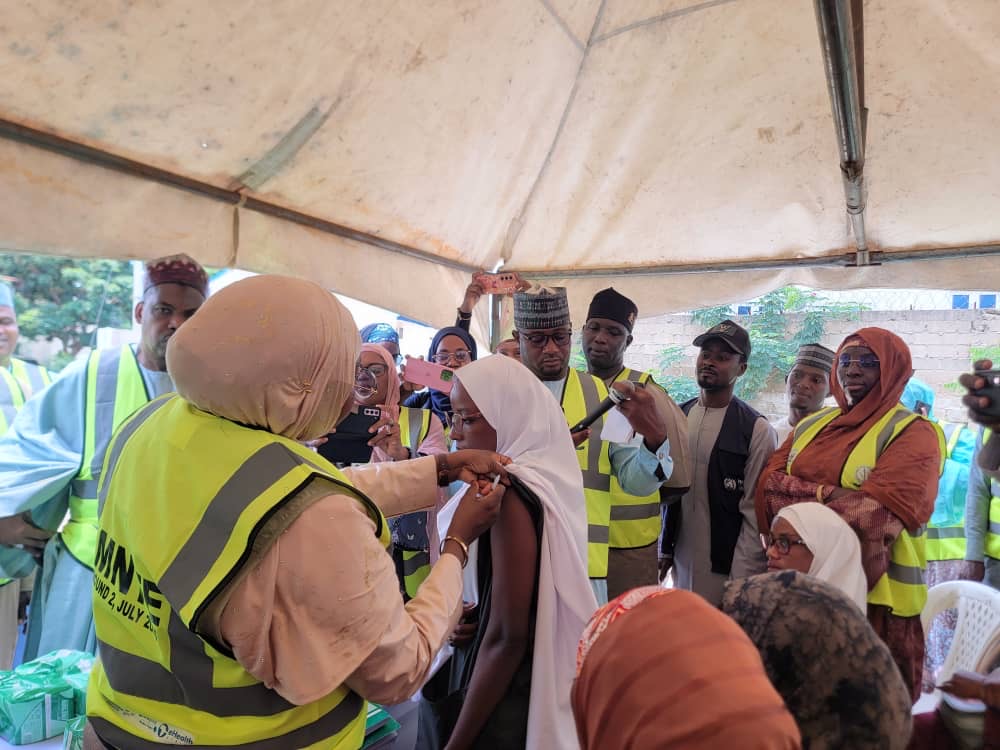
When vaccination teams return to communities across Kano State for the second round of the Maternal and Neonatal Tetanus Elimination Campaign, their mission goes beyond administering vaccines.
They are going after the women who were missed.
Read also: UNICEF Rallies Support for Exclusive Breastfeeding
In the first round of the campaign conducted in May, thousands of women received protection against maternal and neonatal tetanus. But while the exercise recorded 96.5 per cent administrative coverage, 1,191 settlements were not reached.
For health officials, those figures represent more than statistics. Each unreached settlement could mean women who remain vulnerable to a disease that can claim the lives of mothers and newborns.
The second round, which began on Monday, is therefore being seen as another opportunity to bridge the gap and take life-saving protection to women who may live far from health facilities or face other barriers to accessing healthcare.
The campaign is being implemented across 18 high-risk Local Government Areas, with vaccination teams expected to operate from health facilities and temporary posts established in communities, markets, schools, places of worship and other accessible locations.
“Every unreached settlement may contain women who remain unprotected, and Round 2 provides us with an important opportunity to close these gaps and ensure that no eligible woman is left behind,” the state government said.
The first round targeted 1,388,396 women between the ages of 15 and 49, with 1,339,871 reportedly vaccinated.
Read also: Kano Intensifies Malaria Control with 2027 LGA Work Plans
But the work did not end with those who received the vaccine.
The state government is now calling on families, community leaders and religious institutions to help identify and encourage women who may have missed the first round to come forward.
For a woman living in a remote settlement, the arrival of a vaccination team could mean the difference between remaining unprotected and taking a simple step towards safeguarding her health and that of a future child.
The government has urged husbands, parents and other family members to support eligible women, while traditional rulers, religious leaders, women and youth groups, civil society organisations and media practitioners have been asked to help counter misinformation and encourage participation.
Women who received the first dose during Round 1 are also expected to follow the advice of health workers on subsequent doses required to strengthen their protection.
The campaign is supported by partners including the National Primary Health Care Development Agency, UNICEF, WHO, Rotary, AFENET, CORE Group, Solina and the Gates Foundation.
As Round 2 unfolds, the success of the campaign will depend not only on how many women receive vaccines, but also on whether vaccination teams can reach the communities that were missed the first time.
Read also: Marwa Launches Landmark Arms Training for NDLEA
For Kano’s health workers and community mobilisers, the goal is clear: to turn the remaining gaps into opportunities and ensure that no woman is forgotten because of where she lives, how far she is from a health facility or misinformation about vaccination.
“Every woman reached, every dose administered and every settlement covered brings Kano State closer to eliminating maternal and neonatal tetanus.”
