


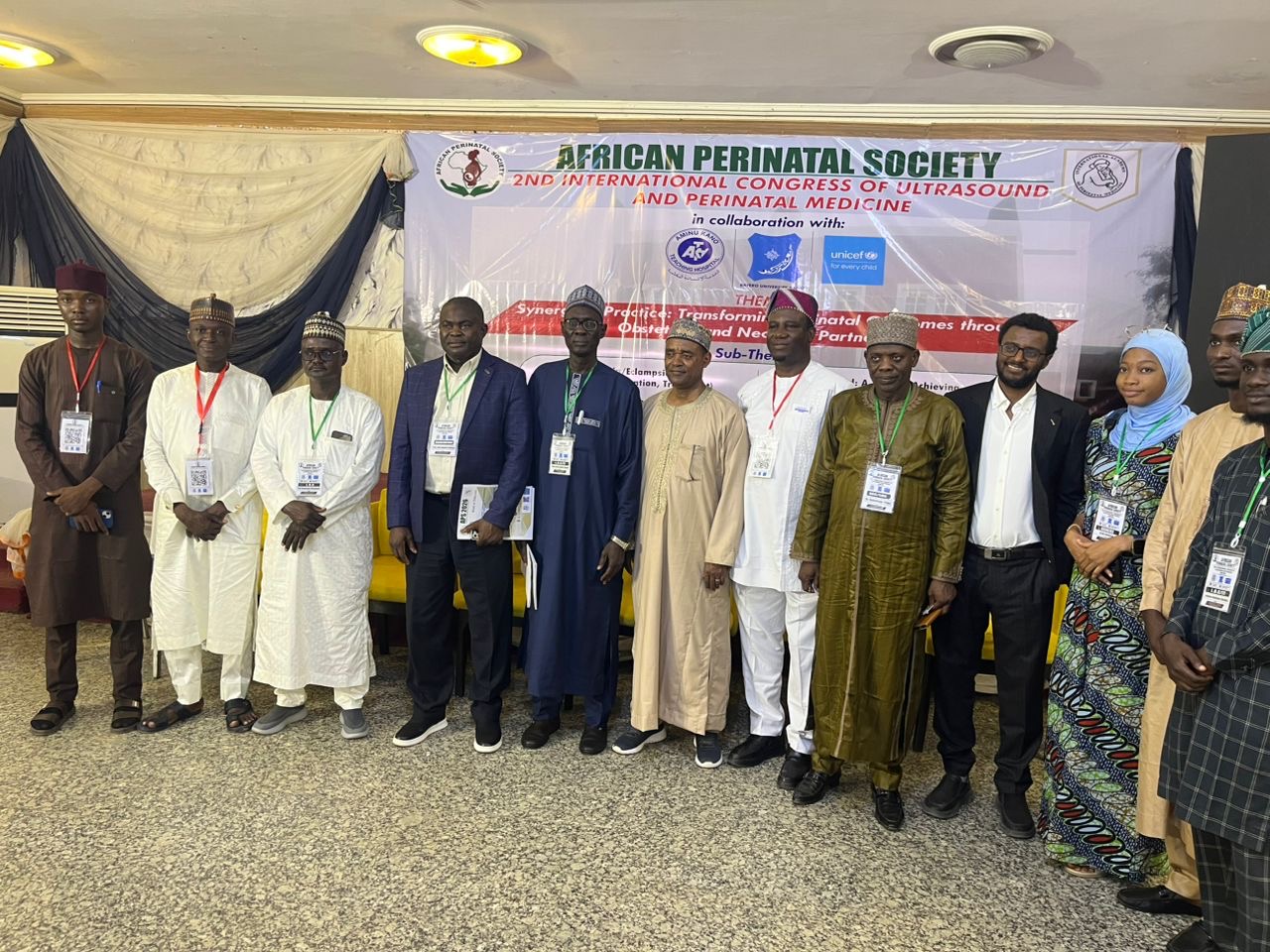
The United Nations Children’s Fund (UNICEF) has backed stronger collaboration among obstetricians, neonatologists, policymakers and other stakeholders to improve maternal, fetal and newborn health outcomes in Nigeria and across Africa.
The call was made at the conclusion of the Second International Congress of Ultrasound and Perinatal Medicine held in Kano, with the theme, “Synergy in Practice: Transforming Perinatal Outcomes Through Obstetrics and Neonatal Partnerships.”
Read also: EU Partners Deepen Kano Development Youth Empowerment, Ties
UNICEF was among the key partners that supported the congress, which brought together health professionals and experts from Nigeria, Finland, the United States, Ghana, Ethiopia, South Africa, Chad and Sudan.
The congress organisers said the theme was deliberately chosen to promote greater synergy between obstetricians and neonatologists, noting that closer collaboration among specialists was critical to improving outcomes for mothers and their babies.
According to the African Perinatal Society (APS), effective coordination between obstetric and neonatal teams would help ensure timely and appropriate care for women during pregnancy and childbirth, as well as newborns requiring specialised attention.
The five-day event, which included pre-congress training sessions, attracted 249 participants and featured 24 expert presentations, four of which were delivered virtually.
A total of 41 abstracts were presented, alongside 10 poster presentations, while eight Nigerian and four foreign facilitators contributed to the scientific sessions.
The APS said the presentations generated extensive discussions and stimulated interest in strengthening maternal and newborn healthcare practices.
The congress also provided an opportunity for frontline healthcare workers, including doctors, nurses, midwives, radiologists, radiographers and sonologists, to receive training in critical skills aimed at improving the quality of care provided to pregnant women and newborns.
The society disclosed that medical equipment donated by some facilitators was distributed to selected hospitals in need.
Looking ahead, the APS announced plans to organise specialist training visits twice a year, with experts expected to spend three days providing training and technical support free of charge.
Read also: UNICEF Rallies Support for Exclusive Breastfeeding
The specialists, it said, would sponsor their visits, while the society would provide accommodation and basic logistics.
The society also disclosed plans to secure additional donations of hospital equipment for obstetric and neonatology wards.
It further announced ongoing discussions with UNICEF and partners from Finland to initiate research, particularly on pre-eclampsia and eclampsia, with a comprehensive proposal expected to be presented to partners soon.
The APS also plans to establish a Pre-eclampsia Research Group and expand collaboration with governments, non-governmental organisations and other partners within and outside Nigeria.
The society said the Third International Congress of Ultrasound and Perinatal Medicine would be held in Addis Ababa, Ethiopia, in 2028, describing it as another opportunity to strengthen the work of the African Perinatal Society.
At the end of the congress, participants adopted the Kano Declaration, which outlined key principles for improving perinatal health.
The declaration states:
“Pregnancy is not a disease.
“Every mother, every foetus and every neonate deserve to live and to live in good health.
“To achieve optimal perinatal outcomes, there is need for synergy between obstetricians and neonatologists, and this should be complemented by policymakers.”
Read also: Governor Yusuf Inspects Kano Hospital, Commends Health Workers
The APS expressed appreciation to UNICEF, the Jigawa State Government, Bayero University Kano, Americano Teaching Hospital and other sponsors and partners for their financial, material and logistical contributions to the success of the congress.
It also commended the facilitators, delegates, healthcare professionals and members of the media for their participation and contributions to the five-day event.
