


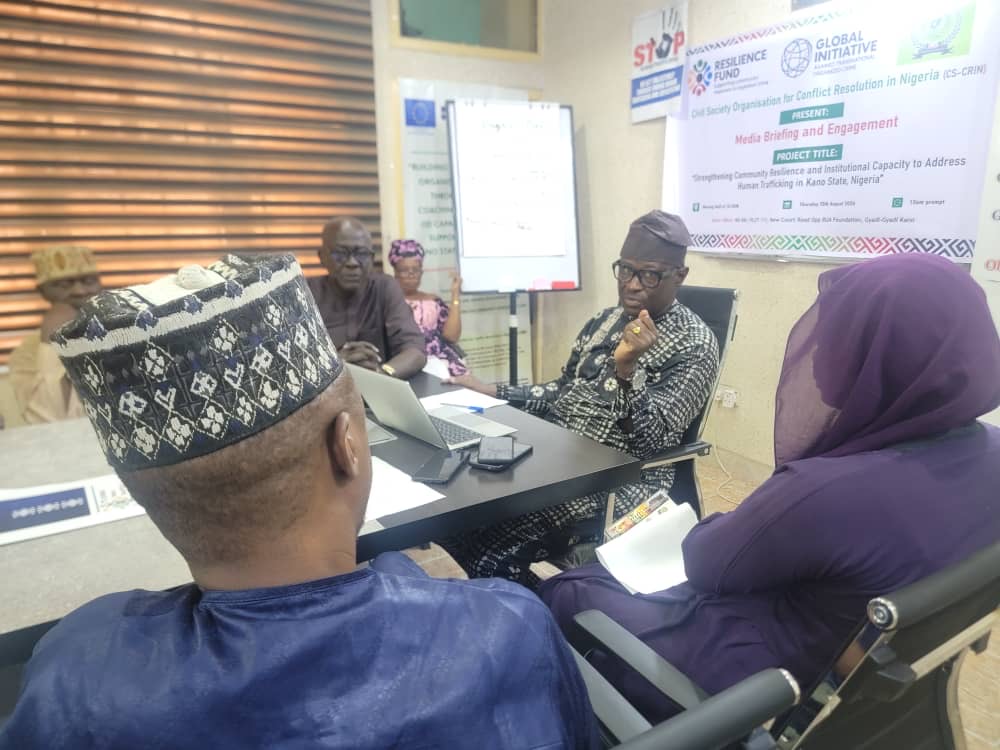
The Civil Society Organisation for Conflict Resolution in Nigeria (CS-CRIN), in collaboration with the National Agency for the Prohibition of Trafficking in Persons (NAPTIP) and media practitioners, has intensified efforts to curb human trafficking and strengthen community-based prevention mechanisms in Kano State.
The initiative is being implemented through the Strengthening Community Resilience and Institutional Capacity to Address Human Trafficking in Kano State, Nigeria project, which seeks to improve coordination among stakeholders, increase public awareness and enhance mechanisms for preventing trafficking.
Read also: Customs Rejects Smuggling, Revenue Leakage Claims
Speaking at a one-day media briefing in Kano, Executive Director of CS-CRIN, Adeniyi Aremu, said a coordinated approach involving communities, government institutions, civil society and the media was essential to tackling trafficking.
He said the project was designed to strengthen the capacity of communities and institutions to recognise trafficking risks and respond appropriately.
“Human trafficking requires a coordinated response because no single institution can address the problem alone. Communities, the media, law enforcement agencies and civil society must work together to prevent trafficking and protect those at risk,” Aremu said.
Participants examined emerging trafficking trends in Kano, including social and economic conditions that expose individuals and communities to exploitation.
The meeting also focused on the media’s responsibility in combating trafficking, with participants advocating investigative and ethical reporting that raises awareness without putting victims and survivors at further risk.
A participant urged journalists to ensure accuracy and sensitivity when reporting trafficking-related issues.
Read also: Nigerian President Pledges Support for Media
“Journalists can contribute significantly by reporting trafficking cases accurately, challenging misinformation and ensuring that the dignity, privacy and rights of victims are protected,” the participant said.
The engagement further examined ways communities could identify vulnerable persons, support prevention initiatives and strengthen referral pathways for victims and survivors.
Participants also discussed the role of paralegals and Journalists Against Transnational Organised Crime (JATOC) in improving responses to human trafficking and other forms of organised crime.
A major outcome of the meeting was the formation of JATOC, a platform expected to facilitate sustained media collaboration, advocacy and public enlightenment on trafficking and transnational organised crime.
Participants called for stronger collaboration among NAPTIP, CS-CRIN, journalists, community structures and other stakeholders to improve referral systems and ensure victims receive adequate protection and support.
READ ALSO: North-West Leaders, Partners Push Child Welfare, Social Protection
Read also: Nigerian Government Reaffirms Commitment to Defeat Insurgency After Fresh Attacks
The organisers emphasised that sustained advocacy, public education and community engagement would be crucial to strengthening both institutional and grassroots efforts to prevent human trafficking across Kano State.
The project is funded through the Resilience Fund, which supports community responses to organised crime under the Global Initiative Against Transnational Organised Crime (GI-TOC).
