


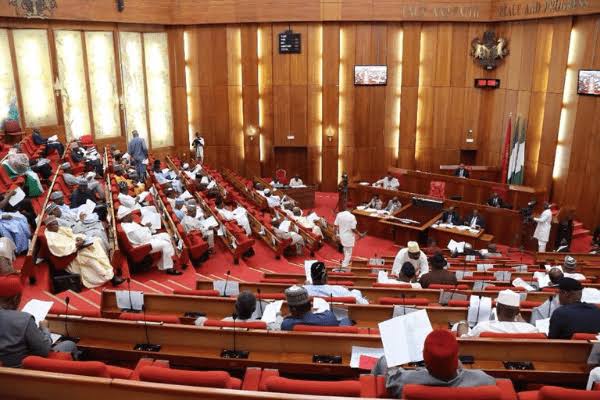
The Senate Committee on the North Central Development Commission (NCDC) has expressed concern over the Federal Government’s monthly release of N2.9 billion to the commission, describing the amount as insufficient to effectively implement its N140 billion 2026 budget.
Chairman of the committee, Senator Titus Zam, voiced the concern on Tuesday while speaking with journalists after an interactive meeting between the committee and the management of the commission.
Read also: Kano Governor Boosts Women Empowerment Drive Statewide
He noted that if the current monthly allocation remains unchanged throughout the year, the commission would receive far less than its approved annual budget, making it difficult to execute planned projects across the North Central region.
“If you give someone that has a budget of N140 billion, N2.9 billion per month, in 12 months, it won’t be up to half of the entire budgetary sum,” Zam said.
He, however, expressed optimism that the current funding level is only a temporary arrangement and that additional releases would be made as the commission becomes fully operational.
Read also: Nigeria, Botswana Seek Stronger Bilateral Economic Cooperation
“I suppose that is just a temporary package. When the commission finally comes to fruition, much more funds will be released. So we thank Mr. President, we thank the executive for dropping something now but look forward to more,” he added.
Despite the funding concerns, the committee chairman assured that the Senate would closely monitor the commission to ensure available resources are prudently managed and directed towards critical development needs.
Zam urged the commission to prioritise agriculture, noting that the North Central region has abundant arable land, favourable rainfall and vast agricultural potential that could drive economic growth and improve livelihoods.
“We need the department of NCDC to take agriculture very seriously. We also have a challenge of insecurity. The commission is advised to support the security forces and state governments to complement their efforts towards mitigating the tide of insecurity within the region,” he said.
Read also: NEMA, Stakeholders to Strengthen 2026 Emergency Preparedness in Kano
He also called on the commission to pay greater attention to rural development, stressing that many communities across the region require improved infrastructure and basic services.
“We also ask them to take rural development very seriously because we are also rural in nature,” Zam stated.
