


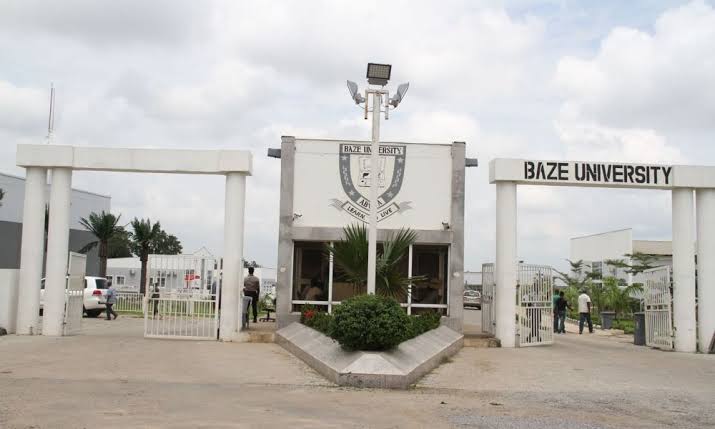
The Minister of Education, Dr Tunji Alausa, has described Baze University as one of Nigeria’s leading private universities with strong prospects for greater growth, urging the institution to embrace innovation and global competitiveness in the changing higher education landscape.
Alausa made the remarks during a reception organised in honour of the newly appointed Vice-Chancellor of Baze University, Professor Abiodun Adeniyi, held in Maitama, Abuja, shortly after the university’s Seventh Inaugural Lecture.
Read also: Kano Hails Quality Control in Ramadan Feeding Programme
The minister commended the institution for its contribution to Nigeria’s education sector, noting its steady academic development, commitment to excellence and growing intellectual tradition.
He, however, stressed that the evolving nature of tertiary education requires private universities to move beyond academic stability and focus on innovation, research, technology and global partnerships.
According to him, “improvements in public universities under the administration of President Bola Ahmed Tinubu have changed the competitive environment, making it necessary for private institutions to redefine their strengths”.
He explained that previous challenges affecting public universities, including academic disruptions, created opportunities for private institutions as families sought uninterrupted academic programmes for their children.
Alausa said the new reality requires universities such as Baze to compete through quality education, research output, employability of graduates and solutions to societal challenges.
“The challenge before Professor Adeniyi and his team is not merely to sustain Baze University’s success but to reimagine and reinvent the institution for a new era,” he stated.
Read also: World Crafts Council Celebrates Otunba Runsewe at Global Event
The minister urged the new Vice-Chancellor to build on the foundation established by the university’s founder, Senator Datti Baba-Ahmed, and previous administrators by strengthening academic standards, research capacity and international collaborations.
He noted that universities must focus on producing graduates who are innovative, technologically skilled, entrepreneurial and prepared for the demands of the global economy.
Alausa encouraged Baze University to expand investment in emerging areas such as artificial intelligence, data science, cybersecurity, renewable energy, biotechnology and the creative industry.
He also emphasised the need for stronger partnerships between universities, government, industries and international organisations, saying collaboration would help bridge the gap between academic knowledge and real-world solutions.
“The university of the future cannot operate in isolation. Collaboration with business, government and international partners will provide students with practical experience and drive impactful research,” he noted.
The minister described the Seventh Inaugural Lecture as evidence of the university’s growing academic maturity, saying such lectures play an important role in advancing knowledge and promoting intellectual discussions.
He expressed confidence in Professor Adeniyi’s ability to lead the institution, describing him as a scholar with administrative experience and a clear understanding of the changing role of universities.
Read also: CHR, YOSPIS Advocate 35% Female Representation in Governance
Alausa called on staff, students and stakeholders to support the new Vice-Chancellor, stressing that building a world-class university requires collective commitment.
He added that with a shared vision and dedication to excellence, Baze University could strengthen its position as a model institution in Nigeria and across Africa.
