


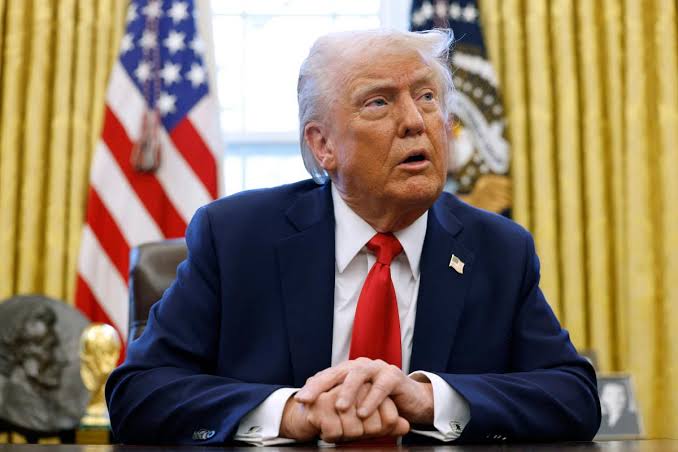
The US Supreme Court on Tuesday turned down President Donald Trump’s effort to narrow birthright citizenship, preserving the long-standing constitutional guarantee for nearly all people born on American soil.
In a 6-3 ruling issued on the final day of the court’s term, the justices sided with lower courts that had blocked Trump’s executive order, which sought to deny automatic citizenship to children born in the United States to parents who are in the country illegally or on temporary visas.
“Children born in the United States to parents unlawfully or temporarily present are ‘subject to the jurisdiction’ of the United States and are citizens at birth under the Fourteenth Amendment’s Citizenship Clause,” Roberts said.
Trump personally attended oral arguments in April, an unusual appearance for a sitting president. He remained for the presentation by Solicitor General John Sauer, but left before hearing arguments from American Civil Liberties Union lawyer Cecillia Wang, who defended birthright citizenship.
The administration argued that automatic citizenship encourages illegal immigration and so-called “birth tourism,” with Sauer telling the court that the policy draws foreign nationals to the US solely to give birth.
The 14th Amendment says that “All persons born or naturalized in the United States, and subject to the jurisdiction thereof, are citizens of the United States.” It excludes only those not under US jurisdiction, such as children of foreign diplomats.
Trump’s team contended that the amendment, adopted after the Civil War, was meant to secure citizenship for formerly enslaved people and not for the children of undocumented migrants or visitors.
But the court has long rejected that narrow reading, including in the 1898 Wong Kim Ark case, which affirmed citizenship for a man born in San Francisco to Chinese parents.
The ruling marks another setback for Trump, whose administration has also faced recent defeats over tariffs and his attempt to remove Federal Reserve Governor Lisa Cook.
AFP
Read also: Somali Referee Accepts World Cup Entry Denial As Fate
