


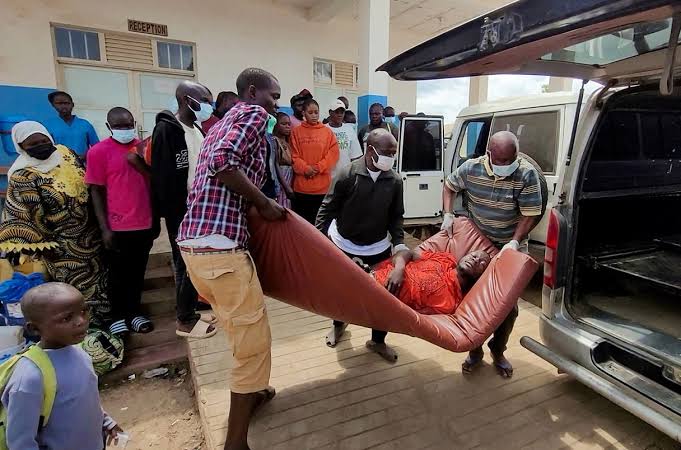
The World Health Organisation (WHO) has warned that efforts to contain the Ebola outbreak in the Democratic Republic of Congo are struggling to keep pace with the spread of infections, while frontline health workers continue to operate under dangerous conditions.
The outbreak, linked to the rare Bundibugyo strain of Ebola, has reportedly infected more than 1,000 people in Congo and at least 20 others in neighbouring Uganda, making it the largest first-month surge recorded for this strain.
Read also: INEC Registers Two New Political Parties in Nigeria
Health officials said the outbreak was identified late, noting that the virus had likely been circulating for several months before authorities formally announced it on May 15.
Speaking from WHO headquarters in Geneva during an online press briefing, WHO Director-General Tedros Adhanom Ghebreyesus said: “Despite the good progress we have made, we still face major challenges, and the outbreak is continuing to outpace the response.”
Read also: VP Shattima, Others Welcome Governor Yusuf into APC
WHO emergency official Abdirahman Mahamud highlighted the difficult environment facing response teams, saying health personnel remain exposed to “abduction threats, crimes and being in the wrong place at the wrong time,” and referenced seven incidents targeting workers.
According to reports, mistrust of authorities and external responders remains widespread in affected communities. Restrictions on traditional burial practices aimed at preventing transmission have also contributed to local tensions.
Read also: Nigeria, UAE Seal Economic pact agreement
WHO noted that laboratory testing capacity has significantly expanded, rising from just eight tests daily at the start of the outbreak to around 2,000 per day.
Maria Van Kerkhove of WHO said increasing local access to testing remains essential, stating: “A big priority of the response is to scale up decentralisation of the testing.”
