


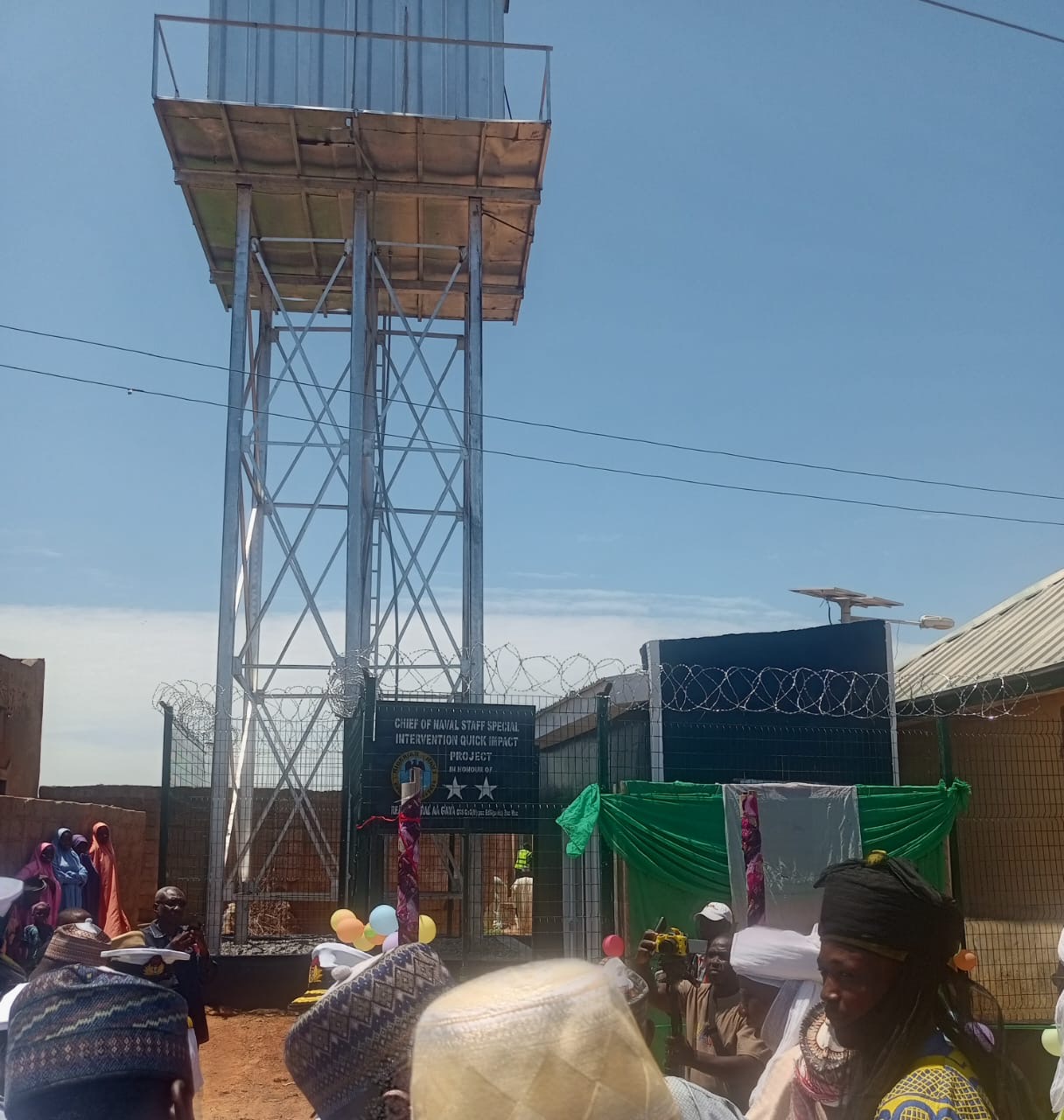
The Nigerian Navy has inaugurated three solar-powered borehole projects in Gaya Local Government Area of Kano State to improve access to potable water and promote community development.
The projects, located in Gaya UMC, Kofar Gabari and Alawa communities, were executed under the Chief of Naval Staff (CNS) Special Intervention Quick Impact Projects Scheme.
Read also: US Urged to Shift from Criticism to Mutual Benefit
The News Agency of Nigeria (NAN) reports that the scheme is in honour of Rear Adm. Aliyu Ahmad-Gaya (rtd.).
Speaking at the inauguration on Saturday, the Chief of Naval Staff, Vice Adm. Idi Abbas, said the projects comprised 11-metre-high water towers, 52,000-litre storage tanks, control rooms and guard rooms.
Abbas, who was represented by the Chief of Naval Safety and Standards, Rear Adm. Pakiribo Anabraba, said the intervention reflected the Nigerian Navy’s commitment to initiatives that had a direct and positive impact on the lives of Nigerians.
He said national security extended beyond protecting Nigeria’s territorial integrity and maritime interests to addressing the basic needs of communities.
“National security also stands when communities are empowered, basic needs are addressed and citizens are given the opportunity to live in safe, healthy and productive environments.
“The provision of safe and reliable water is fundamental to human wellbeing and socio-economic development.
“It contributes directly to improved public health and sanitation, supports educational activities and creates a more conducive environment for households and community activities,” he said.
READ ALSO: Kano Government Moves to Protect Water Facilities
The CNS commended Ahmad-Gaya for identifying the water needs of his community and using the opportunity provided by the intervention scheme to secure the projects.
He said the initiative demonstrated that leadership was most meaningful when it translated into tangible benefits for people and communities.
Abbas reaffirmed the Navy’s commitment to civil-military cooperation and initiatives that promote national development, peace and social cohesion.
He noted that while the Navy’s primary mandate remained the defence of Nigeria’s maritime interests and national security, the service would continue to support interventions capable of improving the lives of citizens.
Read also: Tinubu Confirms January 2026 New Tax Reforms
Earlier, Ahmad-Gaya said access to potable water was fundamental to human dignity, public health and community development.
He described the solar-powered boreholes as practical interventions aimed at reducing the hardship residents faced in accessing water for domestic and other essential needs.
According to him, the projects also underscored the Navy’s commitment to strengthening its relationship with civil communities.
Ahmad-Gaya said national security could not be achieved through military operations alone, but also through mutual trust, understanding and cooperation between the armed forces and the civilian population.
“When the military is able to positively impact the lives of citizens, it creates an atmosphere of goodwill, confidence and partnership.
“This intervention is therefore an important demonstration of the Nigerian Navy’s commitment to people-oriented civil-military cooperation,” he said.
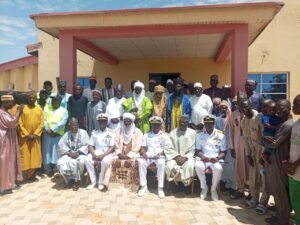
He added that the solar-powered systems would reduce dependence on electricity and ensure relatively low operational costs.
Ahmad-Gaya urged the Gaya Local Government Council and residents to take ownership of the facilities, protect them from vandalism and ensure their proper maintenance.
He expressed appreciation to the Kano State Government, Gaya Local Government Authority, Gaya Emirate Council and other stakeholders for their support and hospitality.
The Emir of Gaya, Dr Aliyu Abdulkadir, represented by the Dan Galadiman Gaya, Alhaji Abdullahi Nayaya, commended Ahmad-Gaya for the intervention, describing him as a “son of the soil”.
Abdulkadir said the projects would significantly improve the lives of residents, particularly in communities that had long faced difficulties accessing hygienic water.
Read also: US Urged to Shift from Criticism to Mutual Benefit
He noted that the locations selected for the projects were among areas where residents had experienced water shortages.
(NAN)
