


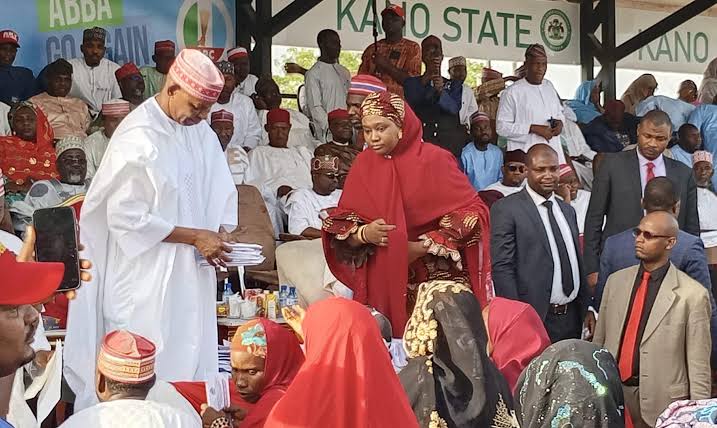
The Kano State Governor, Abba Kabir Yusuf has expanded its women-focused empowerment programme, increasing the number of beneficiaries to 6,680 across all 44 local government areas, as part of efforts to enhance livelihoods and drive inclusive economic growth.
The program under the Kano Monthly Empowerment Scheme introduced by Governor Abbaprovides direct financial support to women to strengthen household incomes and reduce poverty.
Read also: Senate Faults North Central Commission Funding Allocation
Speaking at the disbursement event, Governor Yusuf said the programme demonstrates his administration’s commitment to supporting vulnerable groups and promoting grassroots development.
He noted that the number of beneficiaries has risen from 5,200 to 6,680, with each recipient receiving ₦50,000 to support small businesses and family needs.
According to the governor, the scheme is not merely a cash transfer programme but a broader investment in human capital development and social protection.
Read also: Customs CGC Adeniyi Bags IPRA Award in Greece
He added that the initiative aligns with the Renewed Hope Agenda of President Bola Ahmed Tinubu which prioritizes improved welfare and sustainable economic growth.
Yusuf reiterated his government’s focus on empowering women, youth, and other vulnerable groups, highlighting additional interventions such as youth funding programmes and social welfare schemes already in place.
He urged beneficiaries to use the funds responsibly to improve their economic conditions and contribute to their communities.
Also speaking, the Commissioner for Women Affairs, Hajiya Amina Abdullahi, praised the governor’s commitment, describing the programme as a significant step toward reducing poverty among women in the state.
Read also: Eid-Fitr: NUJ President Lauds Kano Correspondent Chapel’s Unity Drive
She disclosed that the government has adopted a Women’s Economic Empowerment Policy aimed at lifting two million women out of poverty by 2029. She added that the ministry will continue to promote initiatives that support women’s financial independence and long-term economic stability.
“The Kano Monthly Empowerment Programme remains one of several social intervention efforts by the state government to improve living standards and foster inclusive development”.
