


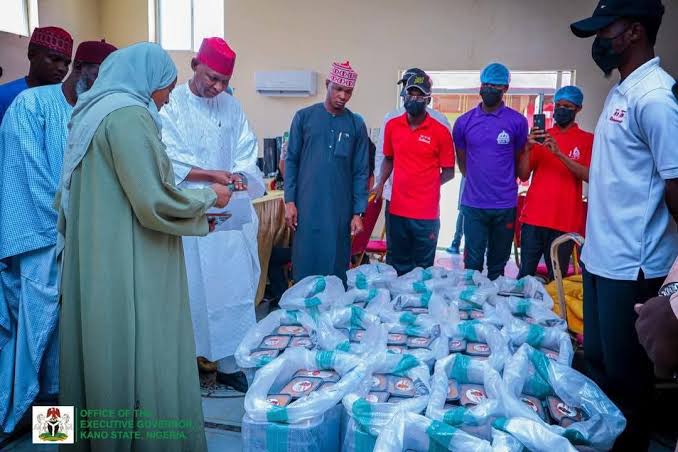
The Kano State Ministry of Religious Affairs has expressed satisfaction with the quality and hygiene standards at cooking centres participating in the state’s 2026 Ramadan feeding programme.
The Honourable Commissioner for Religious Affairs and Chairman of the Ramadan Feeding Committee, Ahmed Tijjani, made the remark after inspecting several designated cooking centres responsible for preparing meals for beneficiaries across the metropolitan area.
Read also: VON, FRCN Chiefs Praise Zulum as Borno Shines in Culture
Tijjani clarified that the inspection focused on cooking facilities rather than the food distribution points.
According to him, the committee visited a number of major contractors responsible for preparing large quantities of meals daily.
He explained that one of the companies, Ataam al-Muasim, prepares about 25,000 meals each day, while other centres including Ten to Ten and Mina-2 also produce 25,000 meals daily.
Al-Latif prepares about 13,000 meals, while another contractor handles approximately 15,000 meals per day.
The commissioner noted that nearly 90 percent of the programme’s contracts are managed by these five companies.
He said the inspection was aimed at ensuring that the food is prepared under hygienic conditions, including proper handling by workers, cleanliness of cooking utensils, and the environment of the kitchens.
Read also: Immigration Officials, Senator Natasha:Passport Face-off
“Alhamdulillah, we are highly impressed with the hygiene standards and the quality of food we observed at the centres we visited,” Tijani said.
He acknowledged that the programme experienced some quality concerns at the beginning but noted that improvements have been made following intensified supervision by the committee over the past two weeks.
The commissioner added that monitoring teams have been visiting cooking and distribution centres to ensure both the quantity and quality of meals meet the agreed standards.
He also revealed that earlier challenges involving diversion of food by some local political actors to undesignated centres have largely been addressed in collaboration with local councillors.
According to him, the committee has now recorded only a few cases of such incidents.
Tijjani further confirmed that the cooking centres are complying with the dietary agreements established by the government, noting that inspectors observed high-quality ingredients including cooking oil, seasoning, and fresh meat from healthy livestock slaughtered at the centres.
Read also: Kano: NSCDC Deploys 1,350 Personnel to Ensure Peaceful Yuletide
According to the commissioner, the government aims to distribute about 115,000 food packages daily during Ramadan.
This, he explained, translates to more than 3.5 million meals expected to be provided throughout the 29 days of the fasting period.
He added that the Ramadan feeding initiative currently covers eight metropolitan local government areas within Kano state.
