


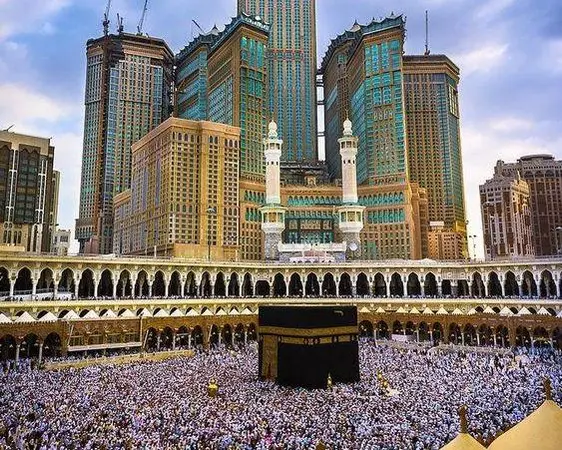
The year 2039 is projected to be an unusual period in the Islamic calendar, with Muslims expected to observe three major Eid celebrations within the same Gregorian year.
According to calculations based on the Umm al-Qura calendar, the first of the three celebrations, Eid al-Adha, is expected to fall on January 5, 2039, corresponding to 10 Dhu al-Hijjah 1460 AH.
Read also: Experts Target Maternal Deaths Through Early Antenatal Care
This will be followed later in the year by Eid al-Fitr on October 19, marking the end of Ramadan in 1461 AH, while another Eid al-Adha is projected for December 26, corresponding to 10 Dhu al-Hijjah 1461 AH.
The calendar alignment also means that the Gregorian year 2039 is expected to contain the principal Hajj period of two different Hijri years.
The first pilgrimage season will be associated with 1460 AH, with Arafah Day falling on January 4 and Eid al-Adha on January 5.

The second Hajj season will belong to 1461 AH, with Arafah Day projected for December 25 and Eid al-Adha on December 26.
The occurrence is a consequence of the fundamental difference between the Islamic and Gregorian calendars. The Hijri calendar is based on the cycles of the Moon, while the Gregorian calendar is a solar calendar.
An Islamic year consists of approximately 354 or 355 days, making it around 10 to 11 days shorter than the 365-day Gregorian year. As a result, Islamic months gradually move earlier in relation to the Gregorian calendar from one year to the next.
This annual shift is particularly significant for Ramadan, Eid and Hajj because their dates are not permanently tied to a particular season of the Gregorian calendar. Over a period of several decades, the months of Ramadan and Dhu al-Hijjah move through the entire Gregorian year.
In 2039, that movement will produce the rare situation in which Dhu al-Hijjah begins near the start of the Gregorian year and returns near its end.
The Umm al-Qura-based calendar shows that 1 Muharram 1461 AH, marking the beginning of the Islamic year, is expected on January 26, 2039.
Ramadan 1461 AH is projected to begin on September 19, with Eid al-Fitr coming on October 19. Dhu al-Hijjah 1461 AH is then expected to begin on December 17, followed by Arafah Day on December 25 and Eid al-Adha the following day.
Read also: Kano APC Receives Shekarau, two Others
The first Hajj season of the year will therefore occur almost immediately after the beginning of 2039. The projected calendar places January 3 as 8 Dhu al-Hijjah 1460 AH, January 4 as 9 Dhu al-Hijjah, the Day of Arafah and January 5 as 10 Dhu al-Hijjah, Eid al-Adha.
The Hajj period continues through the Days of Tashriq, which extend to 13 Dhu al-Hijjah.
After the first Hajj season, the Islamic calendar advances into Muharram 1461 AH before progressing through the remaining months. Ramadan is expected in September and October, culminating in Eid al-Fitr on October 19.
About two months later, Dhu al-Hijjah will arrive again, bringing a second Hajj season and another Eid al-Adha before the end of December.
The phenomenon is not unprecedented. Because of the roughly 10-to-11-day difference between the lunar and solar years, a Hajj season can occasionally occur twice within one Gregorian year.
Such an alignment is generally associated with a cycle of roughly 33 years, although the exact interval varies because lunar years can be 354 or 355 days.
Historical calendar references identify 2006 as the previous occurrence of two Hajj seasons within a single Gregorian year.
It is important, however, to distinguish calendar projections from officially confirmed religious dates. The dates above are calculated using the Umm al-Qura calendar and other corresponding calendar systems.
Actual observances of Ramadan, Eid al-Fitr, Eid al-Adha and the beginning of Dhu al-Hijjah can differ by a day depending on the calendar system, local moon-sighting practices and decisions by relevant religious authorities.
If the projections hold, 2039 will consequently stand out on the Gregorian calendar: Muslims will begin the year with Eid al-Adha from the preceding Hijri year, observe Eid al-Fitr in October after Ramadan 1461 AH, and conclude the year with another Eid al-Adha.
At the same time, pilgrims will have undertaken the major rites of Hajj twice during the same Gregorian year, first for 1460 AH and later for 1461 AH.
Read also: Remi Tinubu Defends Traders’ Grants Empowerment
 The unusual calendar convergence illustrates how the Islamic lunar calendar continues to move independently through the seasons of the solar calendar, creating rare occasions when major Islamic observances that are normally separated by an entire year in the Hijri system appear twice or in the case of Eid celebrations, three times within one Gregorian year.
