


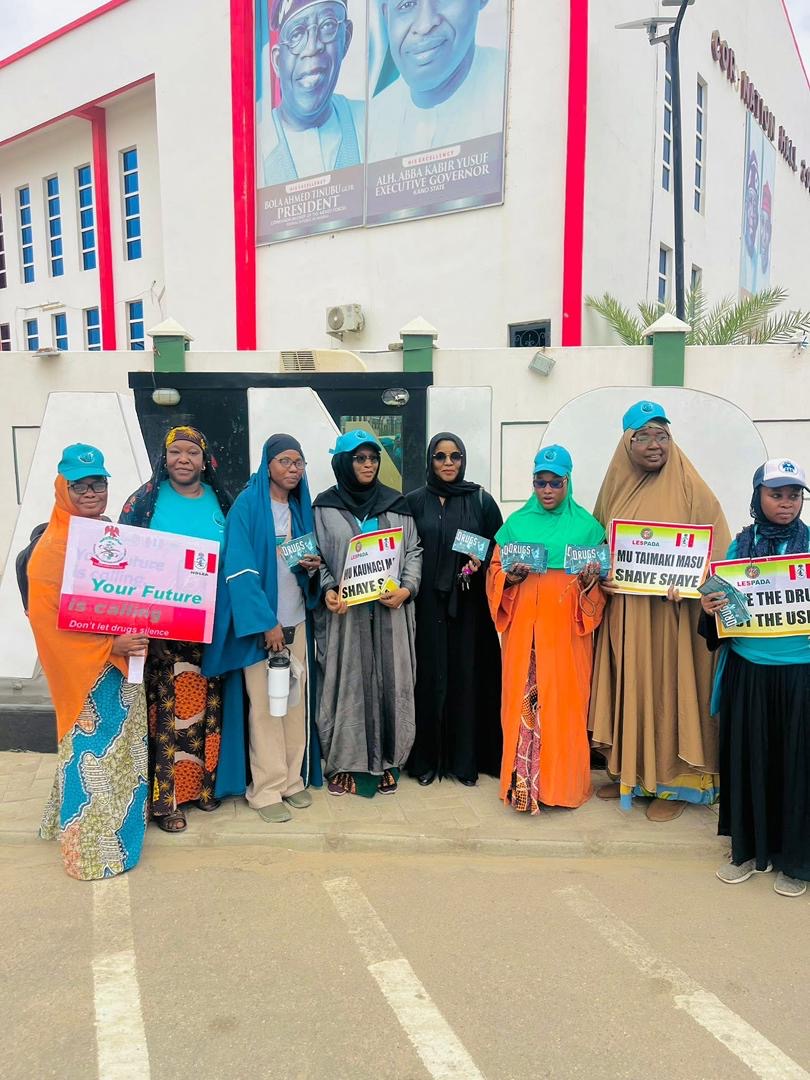
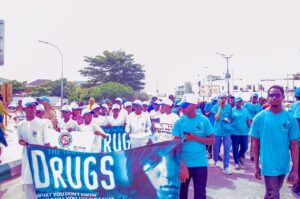
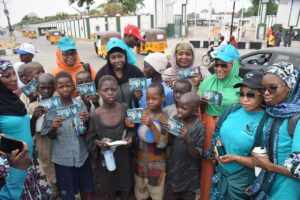
The Nigeria Association of Women Journalists (NAWOJ), Kano State chapter, has partnered with the Coalition of NGOs Against Drug Abuse (CONADA) to mark the 2026 International Day Against Drug Abuse and Illicit Trafficking through a public awareness road walk in Kano.
The campaign commenced along Maiduguri Road and concluded at the Kano State Government House, drawing participation from journalists, civil society organisations, anti-drug campaigners and other concerned stakeholders.
Read also: Kano Residents Praise UNICEF Birth Registration Exercise
Several groups joined the initiative, including LESPADA, NACCRAN, YOSPIS, Widi-Jalo Foundation, YAADAI, IYECF, TAFTA, Jam’iyyar Matan Arewa and the Visionary Women for Empowerment and Humanitarian Foundation (VWEHF), reflecting growing collaboration in the fight against substance abuse.
Speaking to Kano Times, the Chairperson of NAWOJ in Kano State, Bahijja Malam Kabara, expressed concern over increasing cases of drug abuse among young Nigerians and called for stronger collective intervention.
“The rate of substance abuse, particularly among young people, has reached alarming levels and requires urgent and coordinated action from all stakeholders,” she said.
Kabara praised Governor Abba Kabir Yusuf for approving the establishment of a Special Task Force on Drug Abuse and Illicit Trafficking, describing the action as evidence of renewed government commitment to curbing drug-related challenges in Kano State.
Read also: Kano Officials Get Boosted Training on Digital Birth Registration
She also congratulated Ambassador Maryam Hassan of LESPADA and Hajiya Maryam Ardi Muhammad on their appointments into the task force, noting that their inclusion recognises the contributions of civil society organisations in addressing the issue.
“We commend Governor Abba Kabir Yusuf for constituting the Special Task Force on Drug Abuse and Illicit Trafficking. We also congratulate Ambassador Maryam Hassan of LESPADA and Hajiya Maryam Ardi Muhammad on their well-deserved appointments to the committee. Their selection reflects the invaluable contributions of civil society organisations to the campaign against drug abuse and the promotion of safer communities,” Kabara stated.
She called on parents, schools, religious institutions, government agencies and community leaders to take active roles in prevention and rehabilitation efforts.
 “We must not leave this responsibility to the government alone. Every segment of society has a role to play in protecting our youths from the dangers of illicit drugs.”
According to her, sustained public education and youth empowerment initiatives remain essential in reducing substance abuse nationwide.
Read also: Dangote Commissions Cottage Hospital in Kogi State
Observed every year on June 26, the International Day Against Drug Abuse and Illicit Trafficking promotes global cooperation toward reducing drug abuse and its effects.
Data from the National Bureau of Statistics indicates that over 14.3 million Nigerians aged between 15 and 64 are involved in drug use, highlighting the need for stronger prevention and response measures.
